
Atheroembolic renal disease: a microvascular storm posing a diagnostic challenge.
DOI:
https://doi.org/10.56867/Keywords:
Atheroembolic renal disease, A case reportAbstract
Introduction: Atheroembolic renal disease is an uncommon, serious, and consistently underdiagnosed condition. Its diverse clinical presentation often leads to confusion with other causes of acute kidney injury, thereby delaying diagnosis and worsening the prognosis.
Case Report: We reviewed the medical records of a 72-year-old male treated at HCAM, analyzing clinical variables, the progression of azotemia and proteinuria, and renal biopsy findings.
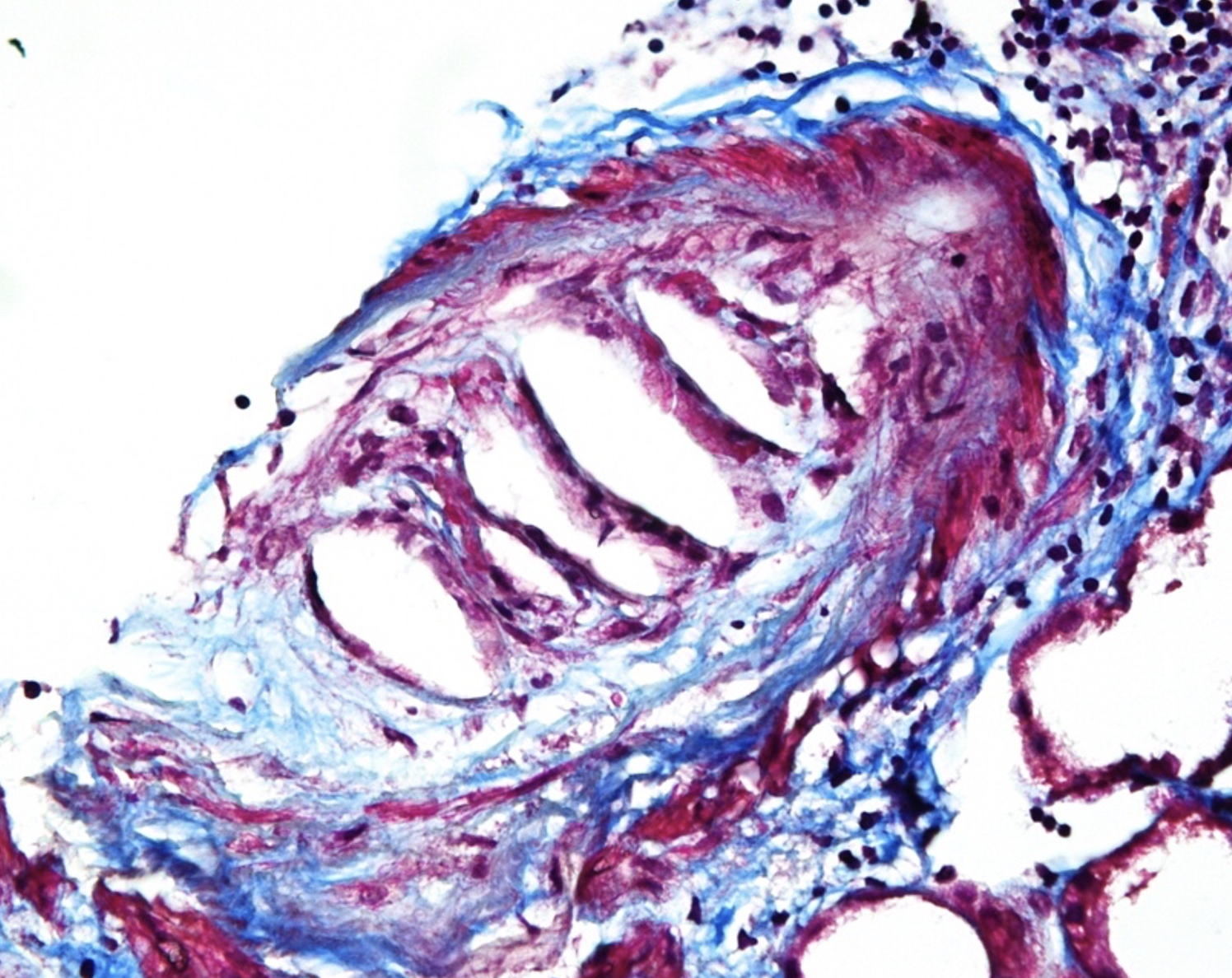
Results: The patient, an active smoker with abdominal aortic and left common iliac artery aneurysms, underwent aortoiliac bypass and right femoral endarterectomy. He developed postoperative KDIGO stage 3 acute kidney injury, initially attributed to hypotension, contrast-induced nephrotoxicity, and rhabdomyolysis. Creatinine levels rose to 6 mg/dL, accompanied by refractory metabolic acidosis, oliguria, and the need for renal replacement therapy. Concurrently, he exhibited extensive *livedo reticularis* on the left lower limb, ischemic pain, and difficult-to-control hypertension—findings that prompted a re-evaluation of the diagnosis. Renal biopsy provided the definitive diagnosis: intraluminal cholesterol crystals, diffuse acute tubular injury, and signs of thrombotic microangiopathy. Treatment was initiated with pulse methylprednisolone (500 mg IV, 3 doses), oral prednisone (0.5 mg/kg/day), high-dose statins, and prophylactic anticoagulation. A multidisciplinary approach enabled the discontinuation of dialysis, and the patient was discharged with a creatinine level of 1.3 mg/dL.
Conclusion: Atheroembolic disease should be included in the differential diagnosis for any patient with atherosclerosis who experiences atypical postoperative renal deterioration. Early renal biopsy is not a last resort; it is a crucial tool that guides treatment and can radically alter the clinical outcome.
Downloads
Published
Issue
Section
License
Copyright (c) 2026 A. Rosero, H.Darquea, J. Salazar, M. Pillajo, T. Silva, P. Changotasig, L. Manjarres. (Author)

This work is licensed under a Creative Commons Attribution-NonCommercial-ShareAlike 4.0 International License.
 10.56867