
Trasplante hepático en la enfermedad en la enfermedad poliquística autosómica dominante con afectación renal y hepática
Reporte de Caso
DOI:
https://doi.org/10.56867/182Palabras clave:
Trasplante hepático, Enfermedad poliquística autosómica dominante, Reporte de casoResumen
Introducción: Introducción: La enfermedad renal poliquística autosómica dominante (ERPAD) es la patología renal hereditaria más frecuente, caracterizada por el crecimiento progresivo de quistes. La enfermedad hepática poliquística (EHP) es su manifestación extrarrenal más frecuente. Aunque la función hepática suele preservarse, el crecimiento masivo del órgano provoca síntomas compresivos graves que deterioran significativamente la calidad de vida.
Materiales y Métodos: Se describe el caso clínico de una paciente femenina de 44 años con ERPAD y afectación hepática severa, atendida en el Hospital de Bonsucesso, Río de Janeiro, Brasil. Se analizó el manejo clínico, los hallazgos imagenológicos (TC de abdomen) y el resultado postrasplante, complementado con una revisión de las clasificaciones de Gigot y Schnelldorfer para determinar la severidad y conducta terapéutica.
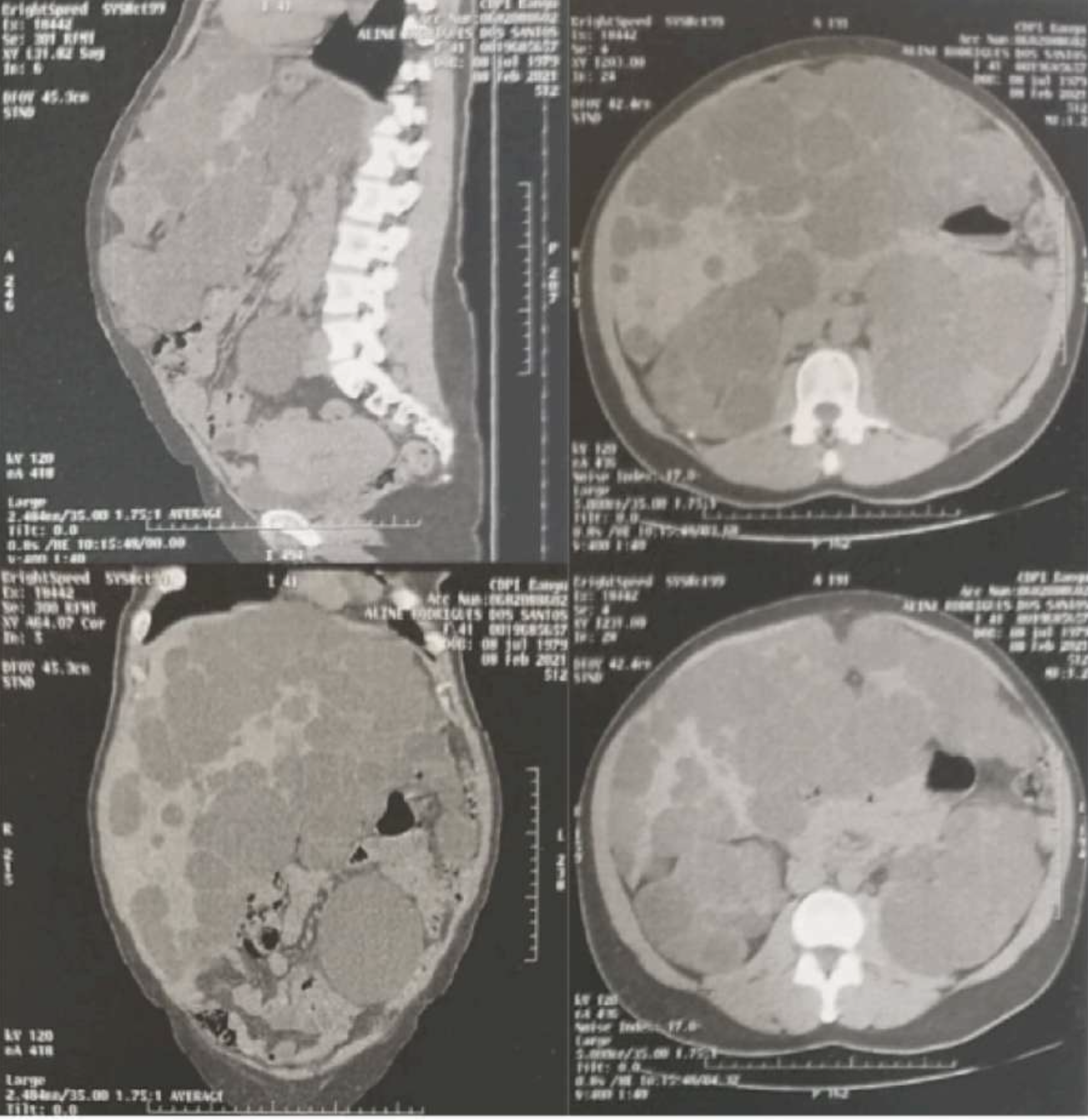
Resultados: La paciente presentaba saciedad precoz, reflujo gastroesofágico y pérdida ponderal de 10 kg, con función renal y hepática normales (TFG 94 ml/min/1.73m²). La TC reveló hepatomegalia masiva y riñones aumentados de tamaño (Clasificación Mayo 1C) con compresión de órganos adyacentes. Fue sometida a trasplante hepático de donante fallecido utilizando criterios de excepción en la escala MELD (20 puntos iniciales). El hígado explantado pesó 4.440 g. Tras el procedimiento, la paciente mostró resolución completa de los síntomas compresivos y mantuvo estabilidad renal (TFG post-trasplante 113 ml/min/1.73m²) bajo inmunosupresión con tacrolimus y micofenolato.
Conclusiones: El trasplante hepático constituye el único tratamiento curativo para la EHP grave con síntomas refractarios. El diagnóstico precoz es vital para considerar opciones terapéuticas oportunas, y el trasplante es una intervención eficaz para restaurar el bienestar del paciente, incluso cuando la función bioquímica de los órganos se mantiene preservada.
Publicado
Número
Sección
Licencia
Derechos de autor 2026 Javier Gonzalo Carrión Cano, Danny García Ordóñez, Luis García Ordóñez. (Author)

Esta obra está bajo una licencia internacional Creative Commons Atribución-NoComercial-CompartirIgual 4.0.
 10.56867